Improve onboarding
Improve the end-to-end customer onboarding process.
Home / Projects / Radiant Solution
Radiant Solution is a financial consultancy scenario from my Business Analysis course, whose bespoke CRM could not keep up with onboarding. Our BA team of seven designed its replacement, a Salesforce CRM connected to the website, HubSpot and SAGE. I wrote the user stories, drew the wireframes, rebuilt the BPMN models, took my turn running workshops and owned UAT.
Radiant Solution offers financial training, staff resource services and financial technology platforms. Its existing bespoke CRM was no longer fit for purpose.
Lead details moved from the website to the CRM team by hand. Invoices passed between the Account Team, the CRM team and the lead. Payments were taken by phone. Each manual step was a chance to lose a lead or make a mistake, so the aim was to automate the process and remove those errors.
Improve the end-to-end customer onboarding process.
Migrate existing records to the new platform.
Give marketing and sales teams reports on sales and campaigns.
Integrate the website with the new CRM so new leads are captured automatically.
Integrate HubSpot and SAGE with the Salesforce CRM.
The team worked in sprints, with Jira for the backlog and Azure DevOps for estimating. My pieces sit at both ends of the chain: the user stories that turn a requirement into something buildable, and the UAT that proves it.
OWNED
Written in the form "As a lead, I want to receive payment options so that I can pay", each with Given, When, Then acceptance criteria. Grouped under epics such as Salesforce CRM Integration, Payment Options, Reports and Admin Portal.
REBUILT
Rebuilt the team's as-is and to-be models in Lucidchart, with separate sub-processes for payment, fulfilment and refunds.
OWNED
Low fidelity screens for the admin user form and the marketing report, so the stories could be discussed against something visible.
OWNED
Test cases for each sprint, written against the Jira stories, with expected result, actual result and pass or fail.
OWNED
Took turns running workshops with the team, and helped prepare the elicitation questions for the business case.
The team analysed the current process and designed the to-be as a main flow with sub-processes for payment, fulfilment and refunds. I rebuilt these models in Lucidchart, and my user stories and UAT were written from them. Choose a view below.
AS-IS{{ c.before }}
TO-BE{{ c.after }}
These are proposed service levels, set in the design for the client to confirm. Each one is measurable, which is why it can be tested.
{{ s.value }}
{{ s.note }}
I built this matrix afterwards from the requirements document, the Jira stories, the wireframes and both UAT sheets. The team did not keep one during the project. Tracing it showed {{ traceSummary }}.
| REQ | REQUIREMENT | OBJECTIVE | STORY | WIREFRAME | UAT | COVERAGE |
|---|---|---|---|---|---|---|
| {{ r.id }} | {{ r.req }} | {{ r.obj }} | {{ r.story }} | {{ r.wf }} | {{ r.uat }} | {{ r.cov }}{{ r.note }} |
Real project artefacts, shown as they were produced.
Nine wireframe screens that I drew: the lead's path from enquiry to payment, then the internal CRM, invoice, reporting and admin screens. Each one names the requirement or story it supports.
SCREEN {{ wfCur.n }} OF {{ wfCur.total }}
{{ wfCur.text }}
{{ wfCur.supports }}
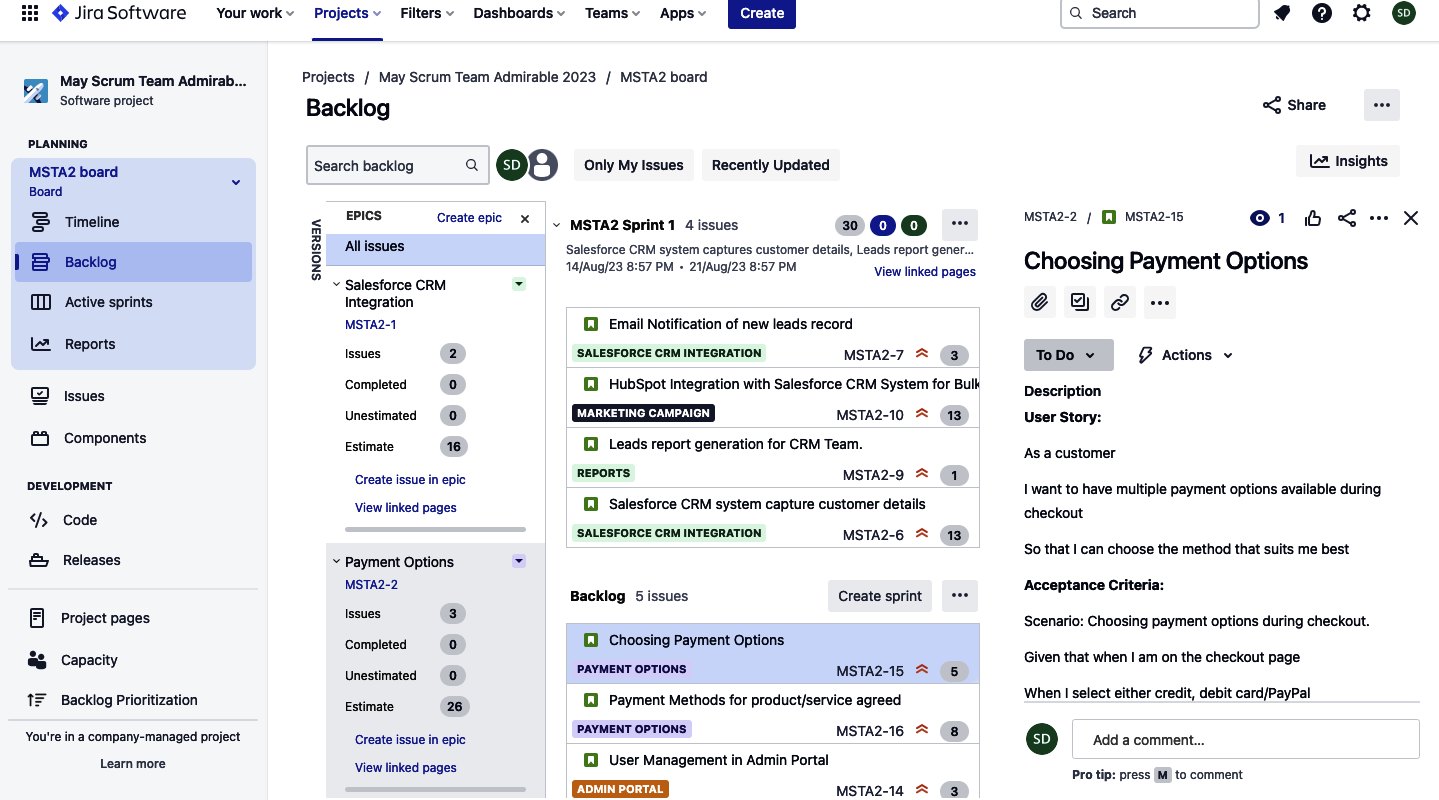
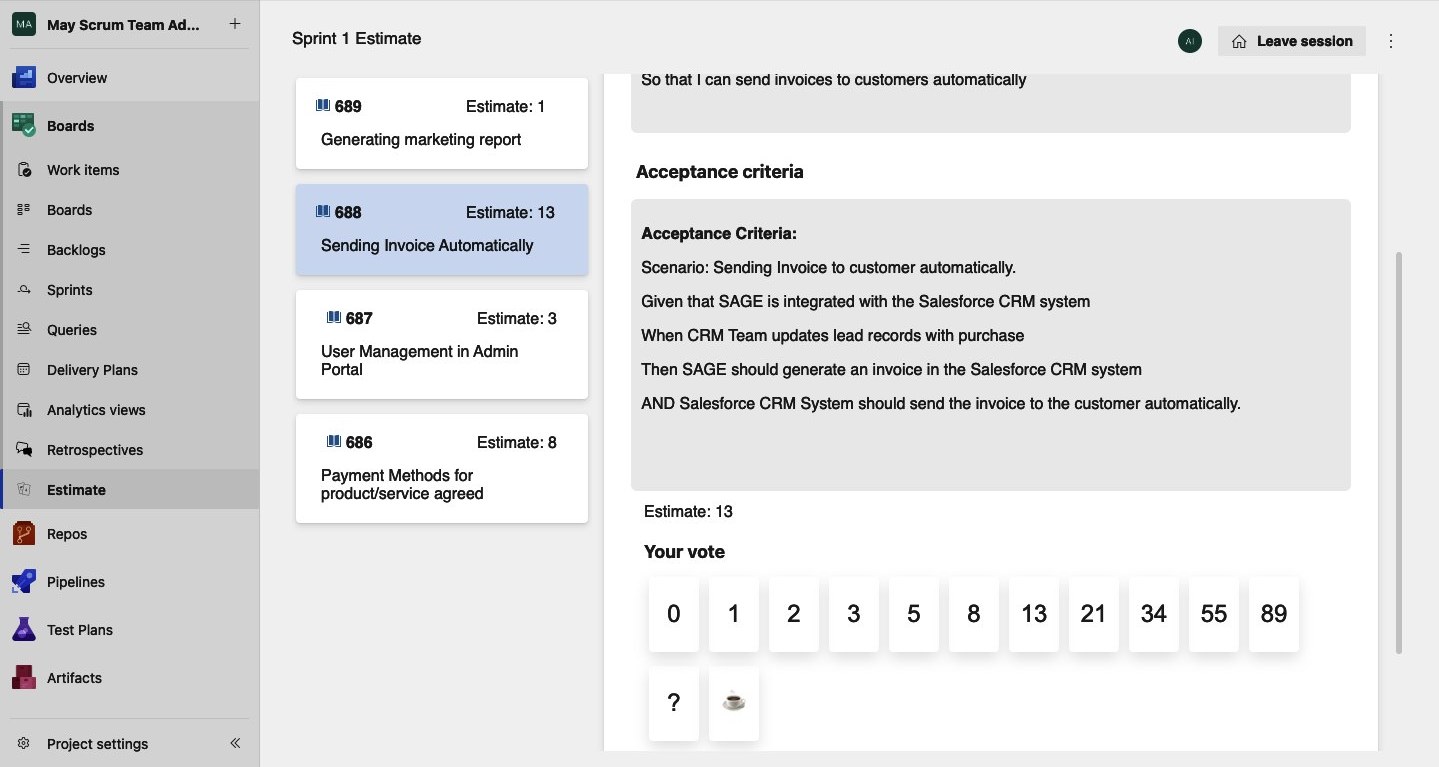
I wrote the UAT test cases for both sprints. Sprint 1 covered the lead capture, notification, leads report and HubSpot stories. Sprint 2 covered the marketing report, user management, payment options, payment methods and automatic invoicing.
Each case records the story, the steps, the expected result, the actual result and a pass or fail, so any failed case points back to one story.
When I traced the matrix afterwards, the payment requirements had gaps. I wrote the missing stories and tests, and marked them "designed, not run" because the project had ended and I will not claim results I do not have.
A TEST THAT FAILED
Sprint 1, scenario TS101.2. Steps 1 to 4 open the browser and the contact form. Steps 5 to 7 are shown.
| STEP | EXPECTED | ACTUAL | RESULT |
|---|---|---|---|
| 5. Enter lead details | System should accept lead details | System accepted lead details | Pass |
| 6. Click submit | System should submit the application | Application submitted successfully | Pass |
| 7. CRM sends notification | System should send email notifications | System did not send email notifications | Fail |
A lead was captured but the CRM team was not notified, which is the whole point of the story. The defect was logged. The sprint ended before the story could be retested.
A TEST THAT CHECKS A LIMIT
Sprint 2, scenario TS104.2. It tests the date range filter on the Marketing report wireframe.
| STEP | EXPECTED | ACTUAL | RESULT |
|---|---|---|---|
| 1. Log in to the admin portal | Log in succeeds | Admin user logged in | Pass |
| 2. Open the report section | Report section displays | Report section displayed | Pass |
| 3. Select marketing report | Marketing report is selected | Marketing report selected | Pass |
| 4. Choose an invalid date range | System says the date range is invalid | System indicated the date range is invalid | Pass |
The happy path shows the report works. This case shows it refuses bad input, which is what a hiring manager looks for in test design.
The team handed over an as-is model, a to-be model with three sub-processes and proposed timers, a requirements document, user stories, wireframes and a two-sprint UAT. I do not claim business results for it, only the work above.