I change complex processes into clear systems which people can actually use.

I try to understand how a system or product works and find where it breaks. Then I gather and validate the requirements and design the interface that fixes it.

Portrait of Jovan Campbell smiling, wearing a navy shirt and a blue checked tie
Jovan CampbellBusiness Analyst and UX Designer

Course project: Business Analyst on a Salesforce CRM implementation

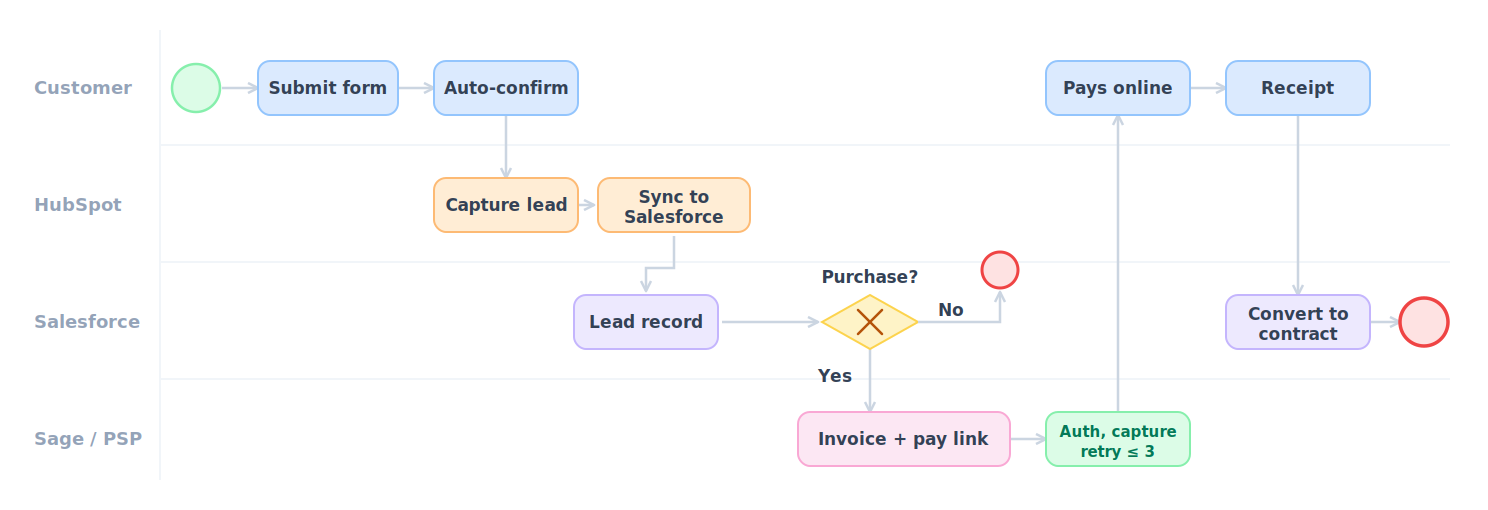
In this course scenario, a financial consultancy's onboarding was losing leads to junk folders and manual re-keying. In a team of seven I wrote the user stories, rebuilt the BPMN models and owned UAT for a Salesforce CRM connected to the website, HubSpot and SAGE.

Simplified BPMN
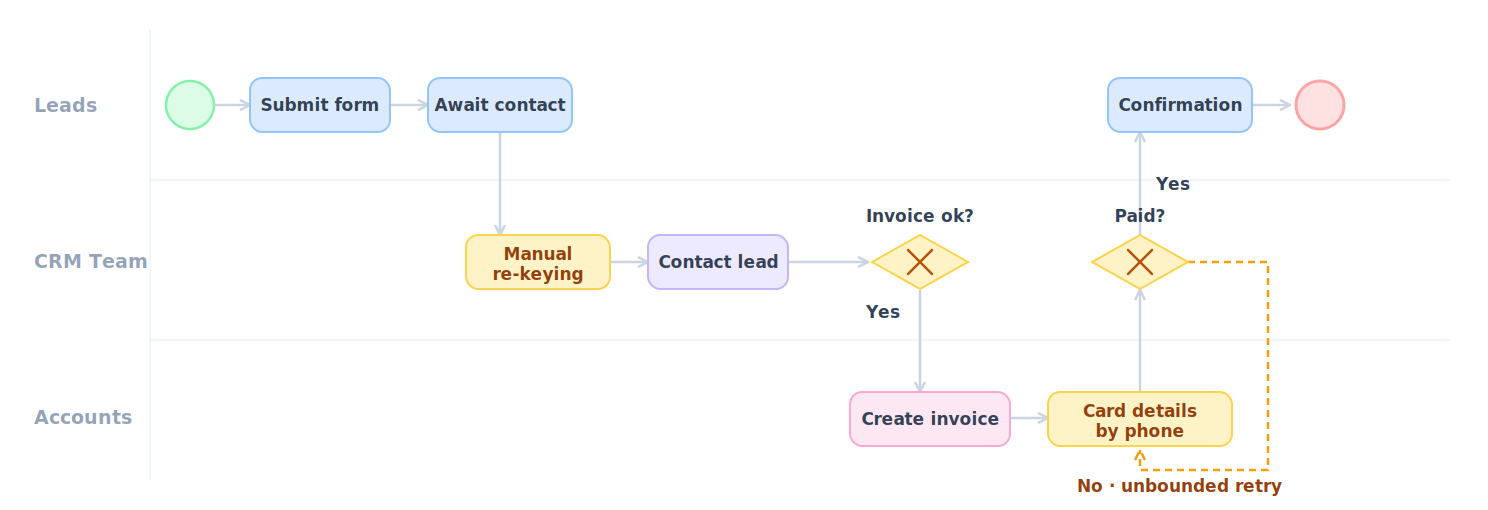
As-is BPMN: a lead submits a form and waits, the CRM team re-keys the details, accounts create an invoice, card details are taken by phone, and a failed payment loops back with no retry limit To-be BPMN: the customer form syncs from HubSpot to Salesforce, Sage and the payment provider send an invoice with a pay link, payment retries are limited to three, then a receipt is issued and the lead converts to a contract

{{ flowCaption }}

  • Elicitation
  • User stories
  • BPMN
  • UAT

RailSmart

UX / PRODUCT DESIGN

Work in progress

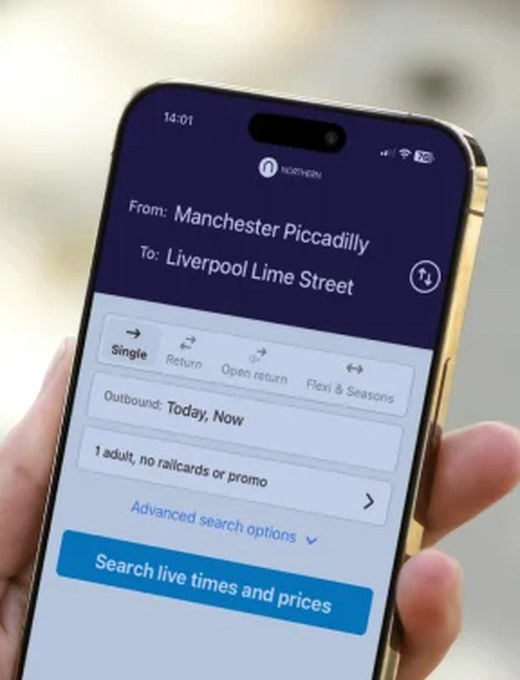
Rail journeys force people across three disconnected tools. I brought route planning, live platform information and station navigation into one voice-led flow.

  • User flows
  • Wireframes
  • Prototyping
Explore Project
A hand holding a phone showing a rail journey planner with a route from Manchester Piccadilly to Liverpool Lime Street

QSEN

BUSINESS ANALYSIS AND UX DESIGN

Work in progress

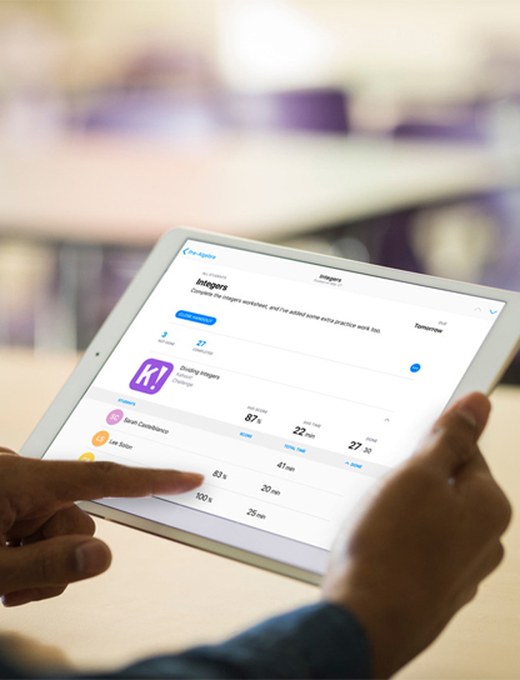
A concept for helping teachers and SENCOs find, share and transfer support information for pupils with special educational needs. I defined the requirements as a business analyst, then designed the experience as a UX designer.

  • Requirements
  • Process mapping
  • Interface concepts
A teacher using a tablet to check a student information profile in a classroom

From complex problems to working solutions

Listen

  • Stakeholder interviews
  • Document analysis
  • Recording and tracing requirements

Map

  • As-is and to-be process models
  • Breakages made visible, not just described

Design

  • User stories and acceptance criteria
  • Wireframes a developer and tester can both act on
  • Developer handoffs

Validate

  • Test cases traced back to the original requirements
  • Defects they actually caught

I'm interested in opportunities where business analysis, technology and user-centred design come together.